BS 5839-6 explained for landlords: smoke alarm rules for rented homes in England
Video, 4:41Published 22 October 2026Last reviewed 22 October 2026
Plays from YouTube in privacy-enhanced mode once you press play.
If you let a home in England, smoke alarms are a legal duty. And BS 5839-6 is the British Standard for fire alarm systems in homes. In this guide, we'll cover what the law requires of landlords, what the grades and categories in BS 5839-6 mean, and what to aim for in a rented home.
The guide below is the video's narration, chapter by chapter, with the diagram from each chapter.
What the law requires
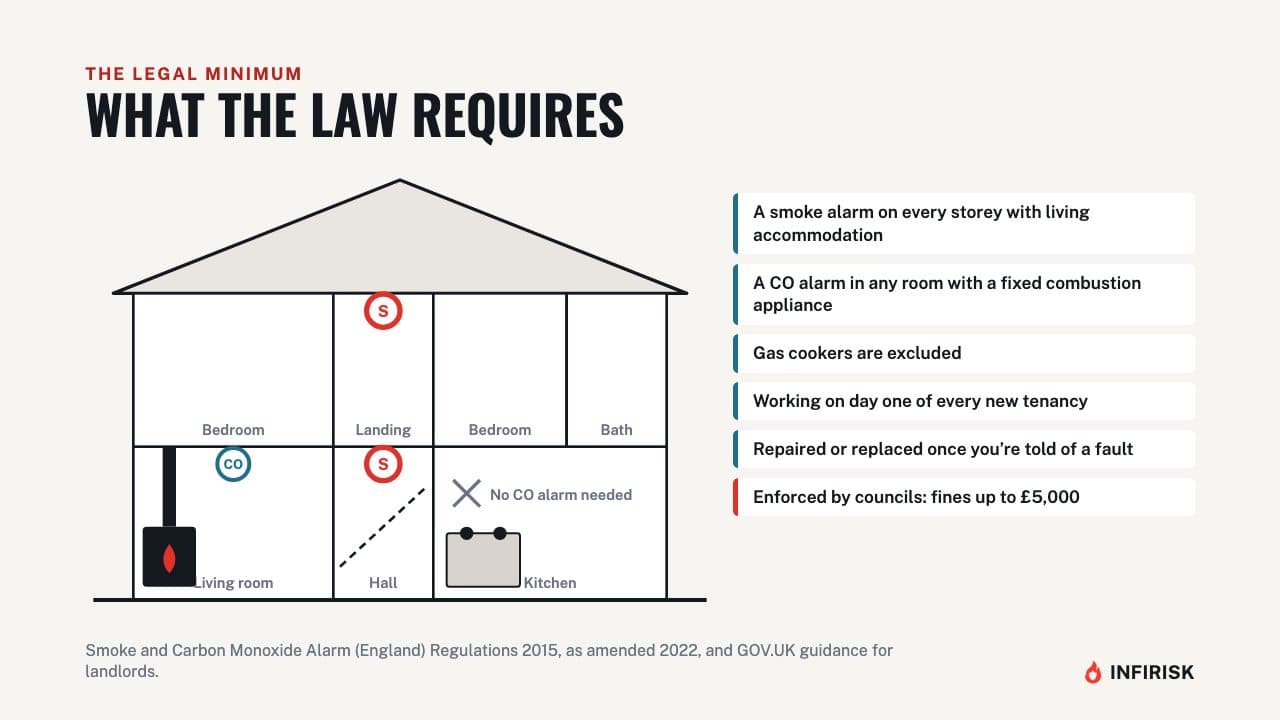
Under the Smoke and Carbon Monoxide Alarm Regulations, as updated in October 2022, private and social landlords in England must make sure there's at least one smoke alarm on every storey with a room used as living accommodation. There must be a carbon monoxide alarm in any room with a fixed combustion appliance, such as a boiler or a wood burner. Gas cookers are excluded.
Alarms must be working on the first day of each new tenancy, and repaired or replaced once you're told they're faulty. Councils enforce this, and fines can reach 5,000 pounds.
Three levels: law, guidance, new homes

But the law sets a minimum, not a design. It doesn't say which type of alarm to fit. The government's guidance for landlords points to BS 5839-6, and says alarms with sealed-for-life batteries are the better option.
For new homes, and some building work, Approved Document B goes further: mains-powered alarms with a backup supply, to at least Grade D2, Category LD3. So what do those grades and categories mean?
Grades: how the alarm is powered
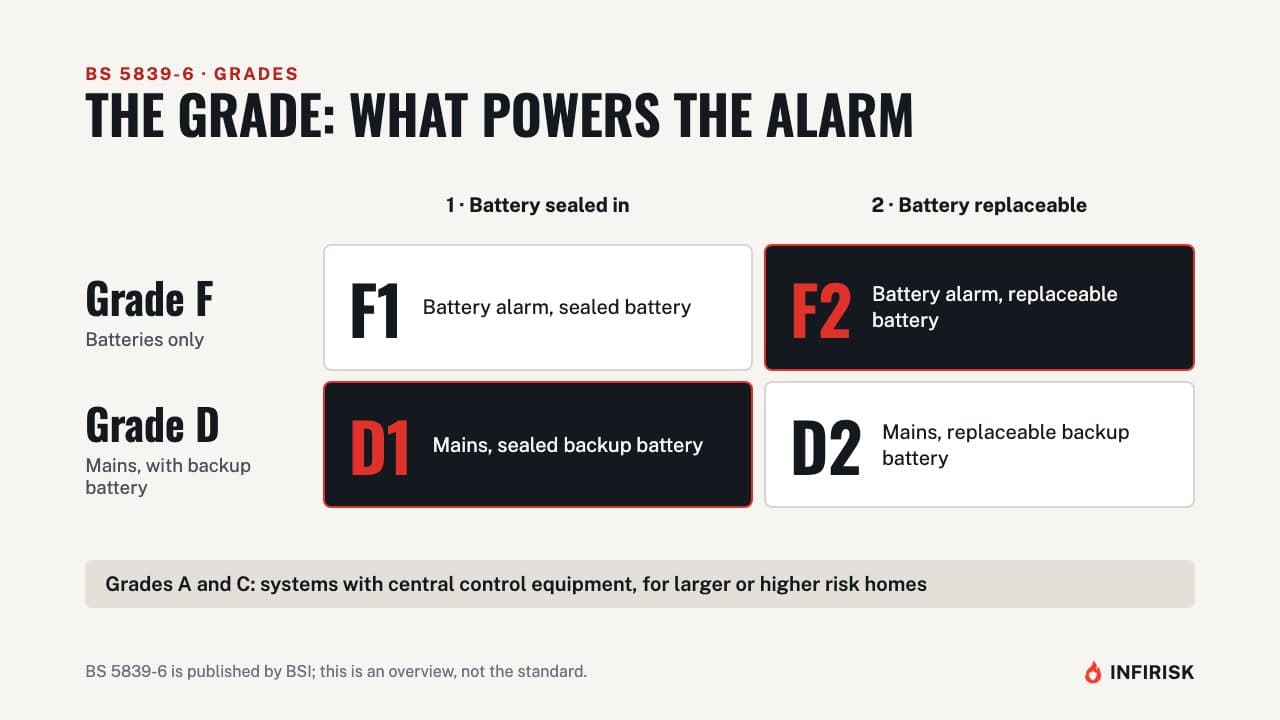
In BS 5839-6, the grade describes the type of system and how it's powered. Grade F alarms run on batteries alone. Grade D alarms run on mains power, with a backup battery built in.
The number matters too. A 1 means the battery is sealed in and can't be removed. A 2 means the user can replace it.
So D1 is mains powered with a sealed backup, and F2 is a battery alarm with a replaceable battery. Above these, Grades A and C use central control equipment, for larger or higher risk homes.
Categories: where detectors go
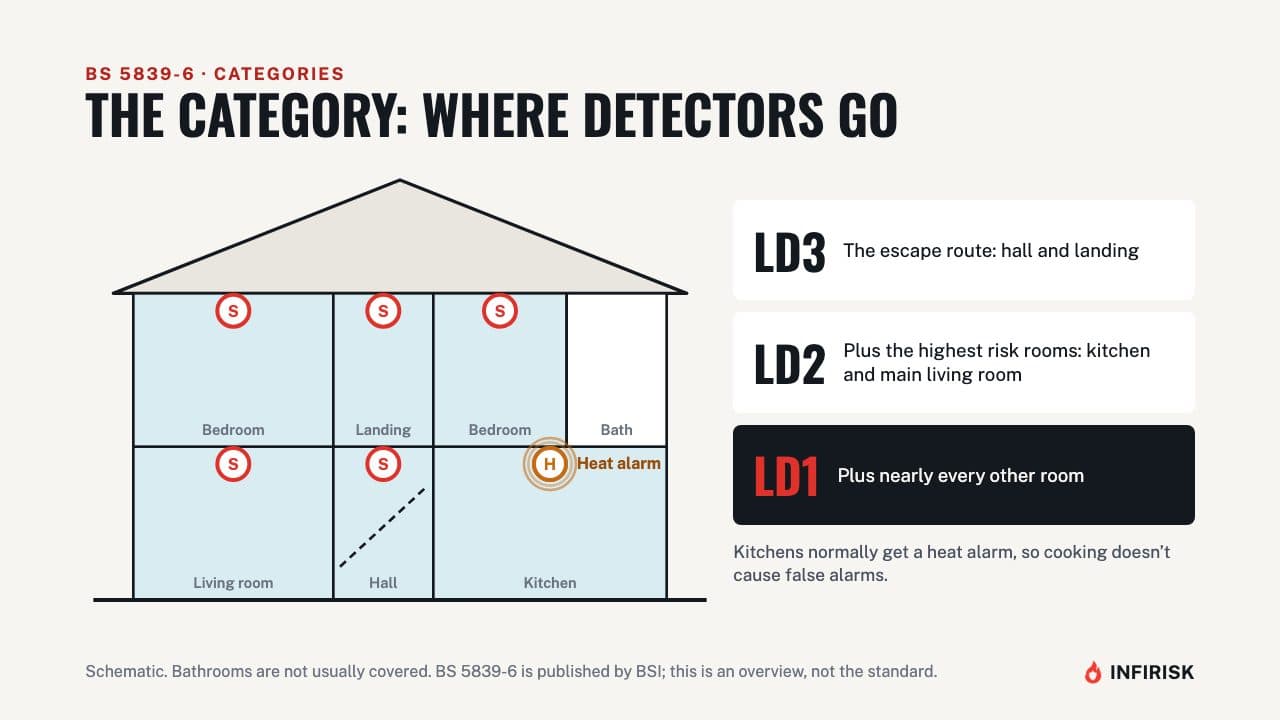
The category describes coverage: where the detectors go. LD3 covers the escape route, meaning the hallways and landings you'd use to get out. LD2 adds the rooms where a fire is most likely to start, or would be most dangerous, such as the kitchen and the main living room.
LD1 goes further still, covering nearly every room. In kitchens, a heat alarm is normally used, so cooking doesn't set off false alarms.
What to aim for in a rented home
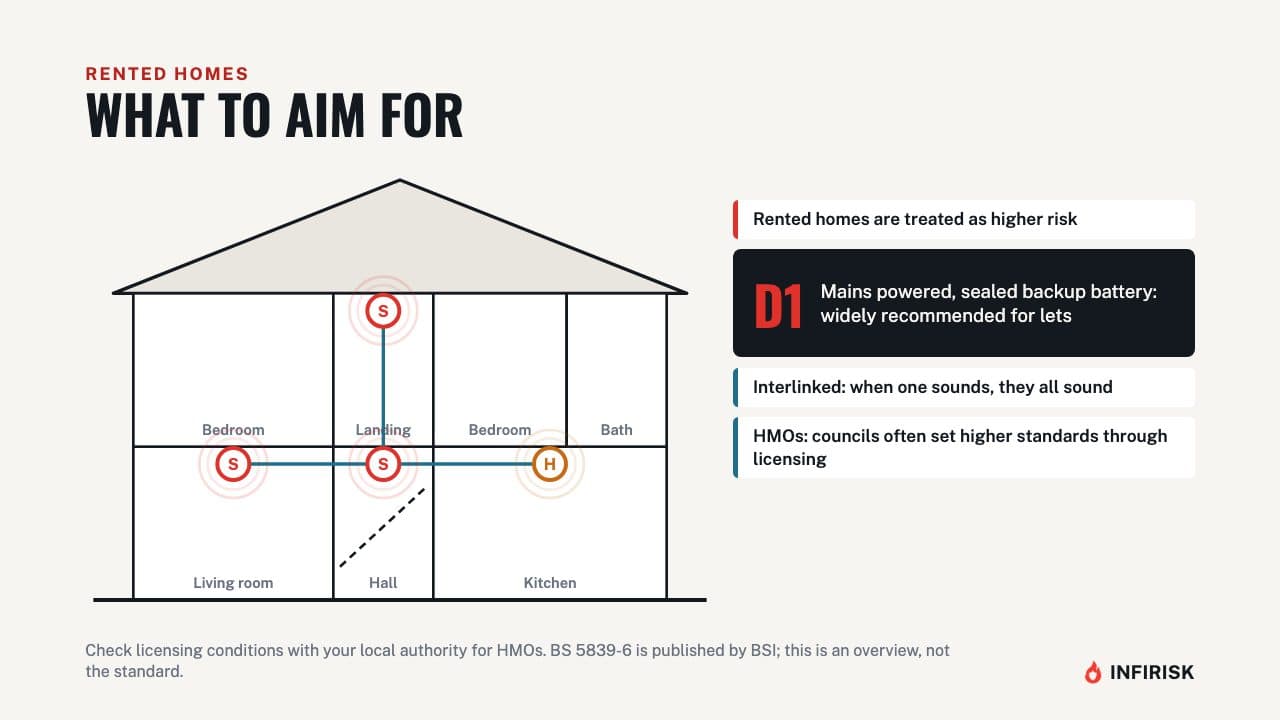
So what should a landlord aim for? Rented homes are treated as higher risk, partly because a tenant might remove a battery from an alarm that keeps going off. That's why mains-powered alarms with sealed backup batteries, Grade D1, are widely recommended for lets.
Where there's more than one alarm, they should be interlinked, so when one sounds, they all sound. And in houses in multiple occupation, councils often set higher standards through licensing, so always check with your local authority.
Test, record, fix, replace
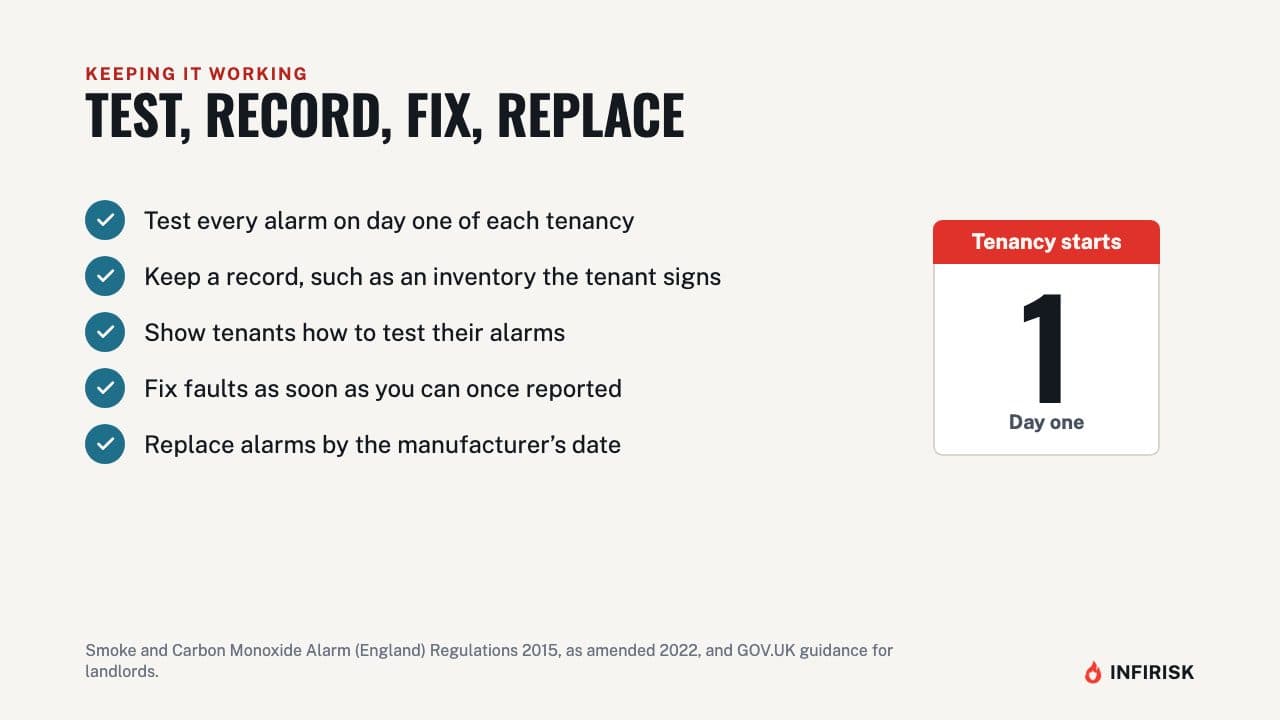
Then keep it working. Test every alarm on the first day of each tenancy, and keep a record, for example on an inventory the tenant signs. Show tenants how to test their alarms.
Fix faults as soon as you can once they're reported. And replace alarms by the date the manufacturer gives, because detectors don't last forever.
Frequently asked questions
What smoke alarms must a landlord fit in England?
At least one smoke alarm on every storey with a room used as living accommodation, and a carbon monoxide alarm in any room with a fixed combustion appliance, such as a boiler or wood burner, but not a gas cooker. Alarms must work on the first day of each tenancy and be repaired or replaced once reported faulty.
What does Grade D1 mean?
In BS 5839-6, Grade D means a mains-powered alarm with a built-in backup battery, and the 1 means that battery is sealed in and cannot be removed. Grade D2 has a backup battery the user can replace.
What is the difference between LD3, LD2 and LD1?
The category describes coverage. LD3 covers the escape route, the hallways and landings. LD2 adds the rooms where a fire is most likely to start or would be most dangerous, such as the kitchen and main living room. LD1 covers nearly every room.
Do landlords have to fit mains-powered alarms?
The law sets a minimum and does not say which type to fit. Government guidance points to BS 5839-6 and favours sealed-for-life batteries, and interlinked mains alarms with sealed backup batteries, Grade D1, are widely recommended for lets. Councils often set higher standards for houses in multiple occupation through licensing.
Sources
Written against
- The Smoke and Carbon Monoxide Alarm (England) Regulations 2015, as amended in 2022, As amended from 1 October 2022
- BS 5839-6 Fire detection and fire alarm systems for buildings. Code of practice for domestic premises, BS 5839-6:2019+A1:2020
- Approved Document B (fire safety), volumes 1 and 2, 2019 edition incorporating 2020, 2022 and 2026 amendments (Volume 1, Section 1)
General guidance for England, not professional or legal advice. Always check the current edition of the guidance, and agree any design with building control or a competent fire safety professional. Contains public sector information licensed under the Open Government Licence v3.0.
More from Landlord Fire Safety
- 3 min readINFIRISK guideWritten guide
Awaab's Law and fire hazards: repair deadlines for social homes from November 2026
Which social homes Awaab's Law covers, what counts as a fire hazard, the emergency and significant hazard deadlines, and where the Fire Safety Order takes over.
 5:54Video and guide
E-bike and e-scooter battery fires: buying, charging and the warning signs
Thermal runaway in plain English, what makes a fire more likely, buying and charging safely, the warning signs, and the law for sellers and shared buildings.
 7:41Video and guide
Housing fire risk assessments explained: BS 9792:2025 for flats and HMOs
The code of practice that replaced PAS 79-2: what it covers, its nine steps, the four types of assessment, competence, and how often to review an assessment.
Related guides
 9:38Video and guide
Fire alarm categories explained: BS 5839-1 L1 to L5, M, P1 and P2
What each BS 5839-1 fire alarm category covers, what changed in 2025, where call points go, how loud the alarm must be, and how to test and maintain a system.
 5:46Video and guide
Loft conversions and fire safety: escape routes, fire doors and alarms
Why a loft room changes the fire safety rules for the whole house, and what Approved Document B asks for: protected stairway, doors, windows and alarms.
- 2 min readINFIRISK guideWritten guide
How Often Should a Fire Alarm Be Serviced?
The BS 5839-1 testing and servicing schedule for UK commercial premises, and who can carry it out.